Older housing stock and finished basements
Many homes across Buffalo were built long before modern air sealing and basement waterproofing standards. That can mean more pathways for damp air and hidden mold behind finished walls after a leak.
Serving Buffalo, New York & surrounding areas
24/7 Emergency Response
Mold remediation in Buffalo, New York
If you are seeing staining, smelling a musty odor, or dealing with a recent leak or flooding, we contain the area, remove affected materials, and provide a clear written scope.
Call Now 716-303-4549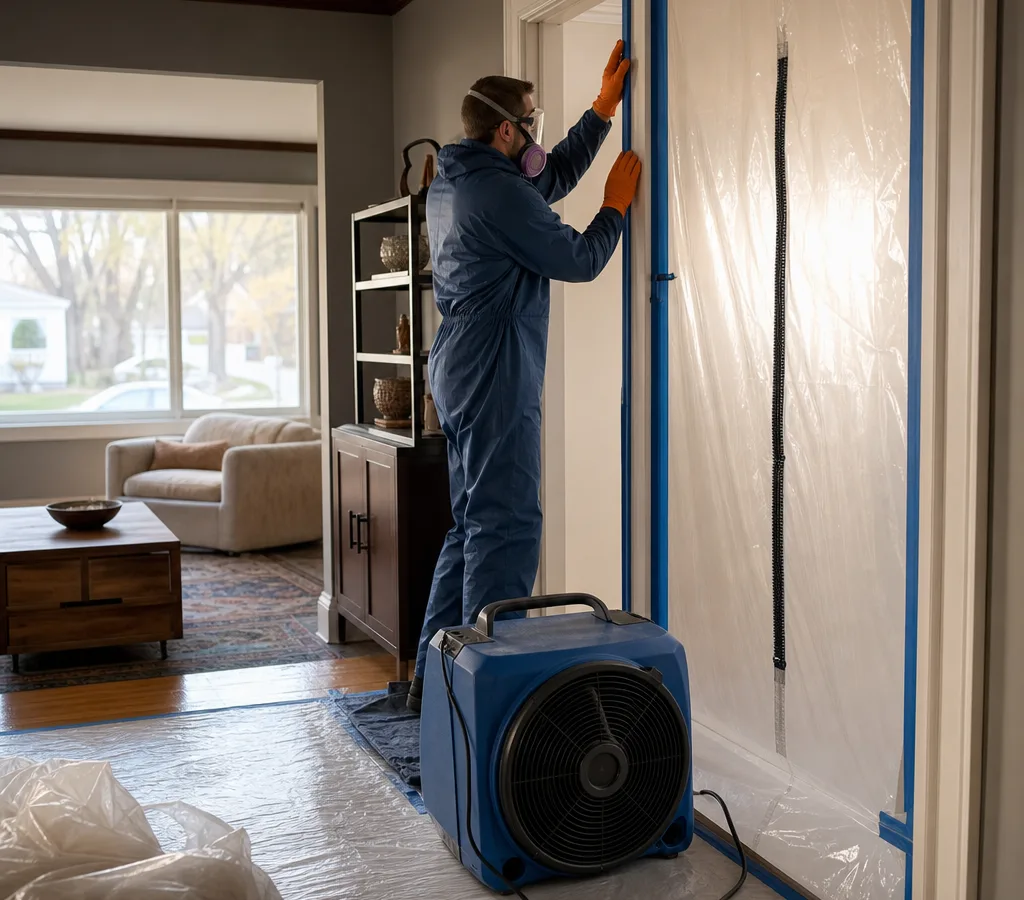
Controlled, source-focused work
When you hire mold remediation in Buffalo, NY, you are paying for controlled, documented work that prevents spores from spreading through the house while contaminated materials are removed and the remaining surfaces are cleaned. For a broader overview of local mold cleanup, visit our Buffalo mold removal homepage.
A proper job typically includes:
What it should not include is a quick spray-and-go approach. Fogging or disinfectant alone does not remove mold growth from porous building materials, and it does not solve the reason mold grew in the first place.
Buffalo property conditions
Many homes across Buffalo were built long before modern air sealing and basement waterproofing standards. That can mean more pathways for damp air and hidden mold behind finished walls after a leak.
A long winter heating season can dry indoor air, but it also creates condensation risks at cold surfaces. Spring thaw and heavy rains can add moisture loads, especially around basements and crawlspaces.
In areas with tighter lot lines and attached or semi-attached structures, proper negative air and sealed pathways help protect adjacent spaces.
Mold can start growing quickly on wet building materials. Early containment and drying often reduces how much material needs to be removed.
A written scope and clear photos help homeowners, landlords, and property managers coordinate tenant communication, insurance conversations, and rebuild work.
Residential and commercial service
Buffalo Mold Removal handles residential and commercial mold remediation in Buffalo, NY, with the same priorities: stop the spread, remove what is contaminated, clean what can be saved, and dry the structure so the mold does not return.
Common situations we see locally include:
We take special care with occupied homes and active businesses. We limit dust and odor migration, protect flooring and pathways, and explain what will be removed versus cleaned.
Inspection to clearance
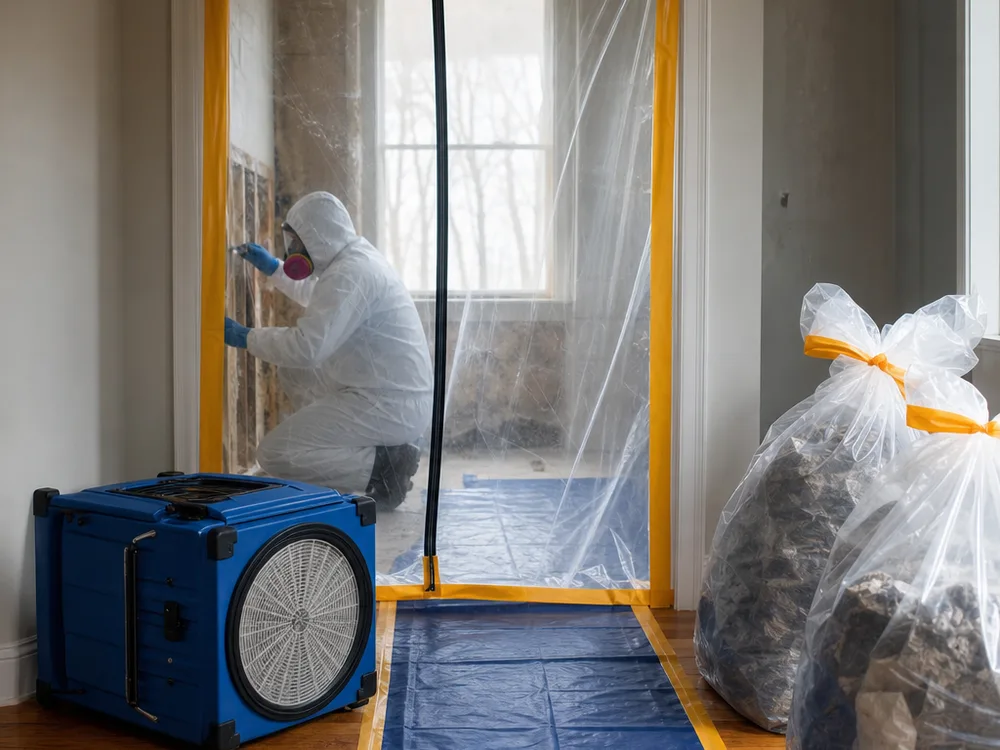
We identify affected materials, the likely moisture driver, and safe access points. Your written scope explains containment, removal, cleaning, and drying.
We isolate the work zone with sealed barriers and run HEPA-filtered negative air as needed to limit movement into clean areas.
Porous materials with active growth are removed and bagged inside containment using controlled demolition methods.
We HEPA vacuum remaining framing and surfaces, damp-wipe, and detail clean. Antimicrobial products may be applied after physical removal when appropriate.
Air movers, dehumidification, and monitoring return materials to acceptable moisture levels before containment comes down.
We review completed work, needed repairs, and recurrence prevention. If independent clearance testing is desired, we coordinate timing after cleaning and drying.
Inspection-based pricing
Mold remediation in Buffalo typically ranges from about $1,200 to $6,000 for many residential projects, with small, well-contained areas sometimes less and large, multi-room or HVAC-involved jobs reaching $10,000+.
Your final cost depends on the size and location of the affected area, how much porous material must be removed, access, the level of containment required, and how much drying-equipment time is needed. The exact price is confirmed after an on-site inspection and written scope.
Clear answers before work begins
Most mold remediation jobs take 1 to 3 days for containment, removal, and cleaning, plus additional time if drying needs to run longer or multiple rooms are involved. You will get a realistic timeline after the on-site evaluation and written scope.
Yes, but remediation has to include drying and moisture control or the mold will return. We typically prioritize stopping the water source when possible, setting up drying equipment, and removing contaminated porous materials once conditions are stable and safe.
Often you can stay if the work zone is properly contained and access routes are controlled, but it depends on the location and household. Temporary relocation can be safer when there are respiratory sensitivities, very young children, or work in a main living space.
Not automatically. Cost is driven more by the affected area, contaminated materials, and the complexity of containment and access. Visible growth should be handled with the same containment and HEPA-cleaning principles regardless of color.
Remediation is primarily about finding and removing affected materials and cleaning the structure rather than relying on air tests alone. If you want pre- or post-remediation sampling, independent testing can provide impartial results, and timing can be coordinated after cleaning and drying.
Limit airflow through the area, avoid fans that could spread spores, and do not dry-scrub or tear out materials without containment. Remove standing water and control humidity while arranging an evaluation and written scope.
Start with an on-site assessment
Tell us what you are seeing and where the moisture started. We will schedule an on-site assessment, explain what needs to be removed versus cleaned, and outline the containment and drying steps so you can make a clear decision before work begins.